
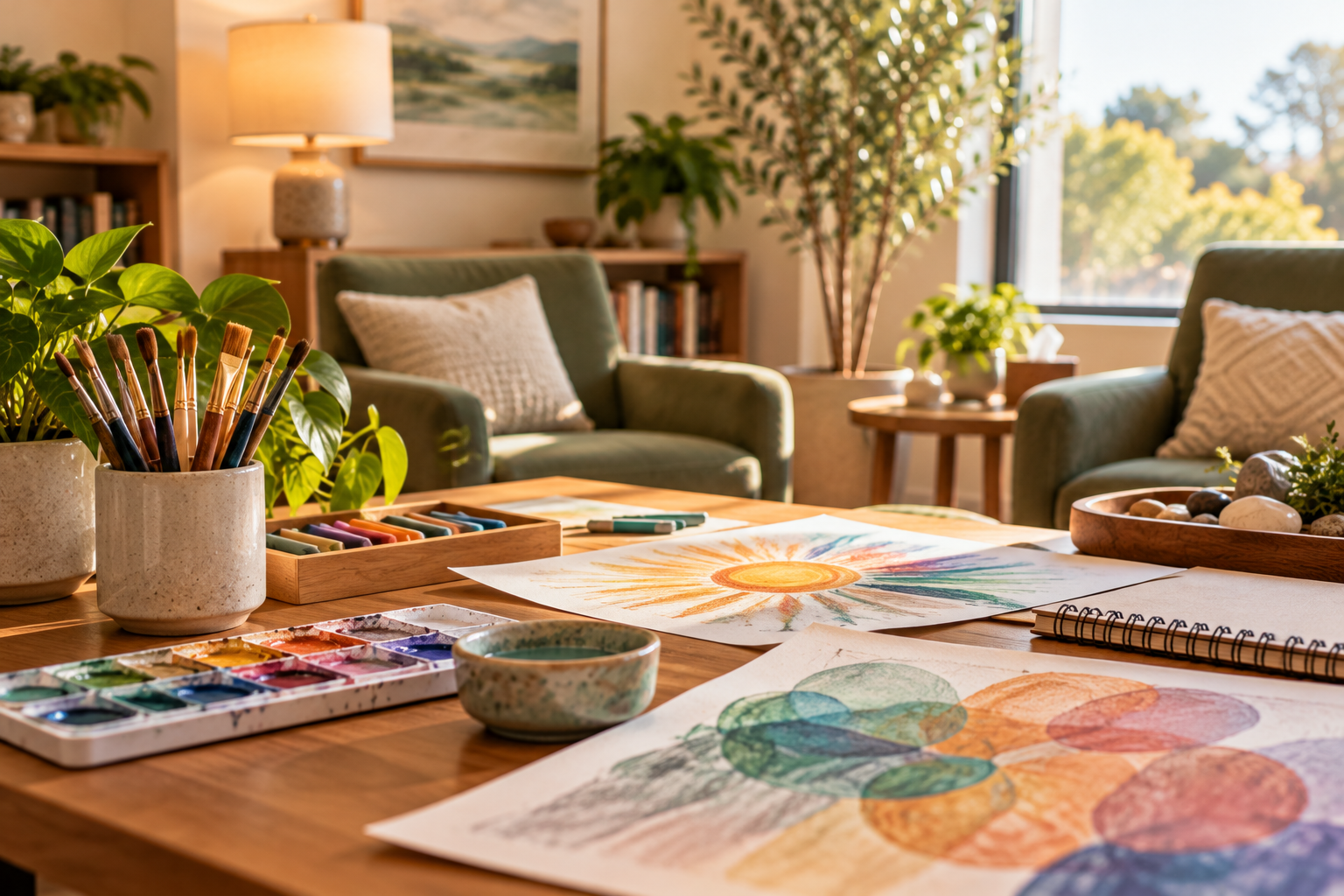
ART THERAPY
Art Therapy on Long Island & Throughout New York State
Sometimes, the experiences we struggle to put into words can be explored through creativity.
You don’t have to be an artist to benefit from art therapy. You don’t need to know how to draw, paint, or create something beautiful.
Art therapy provides an opportunity to explore emotions, memories, relationships, and internal experiences through creative expression rather than relying exclusively on conversation.
At Suffolk Family Therapy, Sarah Cupka, LMHC, CAT-LP, integrates art therapy, parts-informed approaches, and EMDR into her trauma-focused clinical work.
Sarah also supervises our clinical interns and has provided EMDRIA-approved trainings on integrating art therapy, parts work, and EMDR.
Sarah also contributes art therapy interventions to The Reclaiming Pathway™ group curricula, bringing creative expression into both individual and group-based trauma recovery.
We offer in-person trauma therapy in Bohemia and Smithtown, Long Island, alongside virtual therapy throughout New York State.
WHAT IS ART THERAPY?
What Is Art Therapy and How Does It Work?
Art therapy is a mental health treatment approach that incorporates creative expression into the therapeutic process. Through drawing, painting, collage, and other visual activities, clients can explore emotions, memories, and experiences that may be difficult to express through words alone.
Creative Expression
Art therapy uses creative materials to explore thoughts, feelings, memories, and relationships. You don’t need artistic experience or talent to participate.
Emotional Exploration
Creative activities can help you recognize and express internal experiences, including emotions that feel overwhelming, confusing, or difficult to communicate.
Trauma-Informed Healing
Art therapy can be integrated with EMDR and parts-informed approaches to support self-understanding, emotional regulation, and individualized trauma treatment.
The goal of art therapy isn’t to create something beautiful. It’s to create opportunities for expression, understanding, and meaningful therapeutic exploration.
WHO ART THERAPY HELPS
Art Therapy on Long Island for Childhood Trauma, PTSD, Anxiety, and Emotional Expression
Trauma and emotional distress don’t always show up as experiences we can easily explain.
Sometimes we know we’re overwhelmed but struggle to identify why.
Sometimes we understand our past intellectually but feel disconnected from the emotions associated with it.
And sometimes the idea of talking directly about difficult experiences feels intimidating.
Art therapy may provide an additional way to explore these experiences.
Our trauma-informed approach may incorporate creative interventions for clients experiencing:
- Childhood trauma and complex PTSD: Exploring early experiences, emotional responses, and protective patterns.
- Anxiety and emotional overwhelm: Increasing awareness of emotions and developing ways to express internal distress.
- Grief and loss: Exploring complicated feelings surrounding separation, loss, and significant life changes.
- Relationship and attachment difficulties: Understanding emotional needs, boundaries, and interpersonal patterns.
- Self-esteem and identity concerns: Exploring self-perception, personal values, and conflicting aspects of identity.
- Difficulty expressing emotions: Creating opportunities for nonverbal communication and reflection.
Art therapy can be adapted to different developmental needs and treatment goals. Our clinicians assess whether creative interventions are appropriate for each individual.
ART vs. TRADITIONAL TALK THERAPY
Art Therapy vs. Talk Therapy: When Words Aren’t Enough
Maybe you’ve spent years talking about your experiences.
You understand why certain situations trigger you. You recognize the patterns that show up in your relationships. You can explain what happened and how it shaped your beliefs.
But understanding your experiences doesn’t always mean you feel connected to them.
And for some people, finding the words to describe difficult emotions is challenging in the first place.
Art therapy provides another way to explore what you’re experiencing.
Through creative expression, clients can represent emotions, relationships, internal conflicts, and experiences in ways that may feel more accessible than verbal discussion alone.
For example, someone struggling with anxiety might create an image representing what their anxiety feels like.
Someone exploring childhood experiences might use art to represent different aspects of themselves or the protective roles they’ve developed.
The artwork can become a starting point for reflection and conversation.
Art therapy doesn’t replace the importance of a therapeutic relationship or eliminate the need for clinical assessment.
Instead, it expands the ways clients can participate in treatment.
You don’t have to explain everything perfectly to begin understanding yourself differently.
Meet Sarah Cupka — Art Therapist, Clinical Supervisor, and EMDR Educator
Art Therapy With Sarah Cupka, LMHC, CAT-LP, on Long Island
Sarah Cupka, LMHC, CAT-LP, brings an integrative approach to trauma recovery, combining art therapy, parts-informed interventions, and EMDR to help clients explore experiences that may be difficult to express through words alone.
Sarah has provided EMDRIA-approved trainings on integrating art therapy, parts work, and EMDR, sharing her clinical knowledge with other mental health professionals.
She also serves as an intern supervisor at Suffolk Family Therapy, supporting the professional development of emerging clinicians.
Beyond her individual clinical work, Sarah incorporates art therapy interventions into The Reclaiming Pathway™ group curricula, helping clients engage with emotional regulation, self-understanding, protective parts, and trauma recovery through creative, experiential activities.
Her approach recognizes that healing doesn’t always happen through conversation alone. Creative expression can provide additional opportunities to explore emotions, understand internal experiences, and develop a more compassionate relationship with ourselves.
At Suffolk Family Therapy, art therapy isn’t simply an additional service. It’s one of the approaches we integrate into our broader model of trauma recovery.
THE RECLAIMING PATHWAY™
How Art Therapy Is Integrated Into The Reclaiming Pathway™ Trauma Recovery Program
At Suffolk Family Therapy, art therapy extends beyond individual sessions.
Sarah Cupka, LMHC, CAT-LP, incorporates art therapy interventions into The Reclaiming Pathway™ group curricula, helping clients explore their experiences through creative expression alongside traditional therapeutic approaches.
Our structured trauma recovery program combines weekly individual trauma-focused therapy with weekly therapeutic groups designed to support emotional regulation, self-understanding, and meaningful change.
Creative interventions provide additional ways for clients to engage with the material, particularly when internal experiences are difficult to identify or express verbally.
Our Four Stages of Trauma Recovery
1. Build Capacity
Develop emotional awareness, regulation skills, and greater understanding of internal experiences. Creative activities may help clients identify emotions, recognize protective responses, and explore personal resources.
2. Resolve the Past
When clinically appropriate, process unresolved experiences using EMDR and other trauma-focused interventions. Art-based activities may support reflection, emotional expression, and preparation for trauma processing.
3. Reclaim Your Life
Explore identity, boundaries, relationships, and personal values through experiential exercises that encourage greater self-understanding and flexibility.
4. Sustain Recovery
Strengthen self-awareness, internal trust, and the ability to apply what you’ve learned to everyday life.
Creative Expression as Part of Group Therapy
Our group curricula incorporate experiential learning because understanding a concept intellectually doesn’t always mean we can recognize or apply it in our own lives.
Art therapy interventions can help clients externalize internal experiences, explore different parts of themselves, and reflect on patterns in ways that may feel more accessible than conversation alone.
By integrating creative expression with trauma-focused psychotherapy, we provide multiple opportunities for clients to engage in the recovery process.
VIRTUAL ART THERAPY NEW YORK / IN-PERSON ART LONG ISLAND
Art Therapy on Long Island and Virtual Trauma Therapy Throughout New York
Suffolk Family Therapy provides trauma-focused psychotherapy in Bohemia and Smithtown, serving clients throughout Suffolk County and surrounding Long Island communities.
Suffolk Family Therapy offers:
In-Person Art Therapy on Long Island
Our in-person services provide opportunities to incorporate creative materials and experiential interventions into individualized psychotherapy.
Sarah Cupka, LMHC, CAT-LP, integrates art therapy into her trauma-focused clinical work, with appointments subject to location and availability.
Virtual Art Therapy and Trauma-Focused Psychotherapy in New York
Creative and expressive interventions can also be adapted for virtual therapy when clinically appropriate.
Clients may use accessible materials from home while participating in therapist-guided activities and reflection.
Virtual therapy can provide additional flexibility for people managing work, family responsibilities, transportation challenges, or sensory needs.
Our clinicians assess whether virtual art therapy interventions are appropriate based on each client’s clinical needs, treatment goals, and access to a private therapeutic environment.
ART THERAPY FAQ
Frequently Asked Questions About Art Therapy
Do I Need to Be Good at Art to Benefit From Art Therapy?
No. Art therapy doesn’t require artistic talent or previous experience. The focus is on expression, exploration, and the therapeutic process rather than creating artwork that looks a certain way.
Can Art Therapy Help With Childhood Trauma?
Art therapy may provide opportunities to explore emotions, memories, and beliefs associated with childhood experiences. It can complement other trauma-focused interventions based on individual needs.
Is Art Therapy Effective for PTSD?
Art therapy is used as a supportive or complementary approach for trauma-related difficulties. However, research supporting art therapy as a standalone PTSD treatment is more limited than the evidence for established treatments such as EMDR.
Can Art Therapy and EMDR Be Used Together?
Yes. Clinicians with appropriate training may integrate creative interventions into EMDR preparation, parts work, and other aspects of trauma treatment when clinically appropriate.
Is Art Therapy Only for Children?
No. Art therapy can be used with children, adolescents, and adults. Creative expression may be helpful at different ages and developmental stages.
Who Provides Art Therapy at Suffolk Family Therapy?
Sarah Cupka, LMHC, CAT-LP, integrates art therapy, parts-informed approaches, and EMDR into her trauma-focused clinical work. She also supervises clinical interns and has provided EMDRIA-approved trainings integrating these approaches.
Do You Offer Virtual Art Therapy in New York?
Suffolk Family Therapy offers virtual trauma-focused psychotherapy throughout New York State. Creative interventions may be incorporated into online sessions when appropriate for the client’s needs and the clinician’s treatment approach.
START ART THERAPY IN NEW YORK
Begin Art Therapy With Sarah Cupka on Long Island
You don’t have to find the perfect words to begin exploring your experiences.
Whether you’re struggling with childhood trauma, anxiety, emotional overwhelm, or difficulty understanding your internal responses, art therapy may provide another way to engage in meaningful therapeutic work.
At Suffolk Family Therapy, Sarah Cupka, LMHC, CAT-LP, integrates creative expression, parts-informed interventions, and EMDR into individualized trauma treatment.
Our approach emphasizes understanding your experiences, building emotional capacity, and developing a more compassionate relationship with yourself.
In-person trauma therapy on Long Island. Virtual therapy throughout New York State.
Our intake team can answer questions about art therapy, relationship patterns, trauma treatment, EMDR, program fit, clinician availability, insurance and self-pay options, and getting started.